What is multiple myeloma?
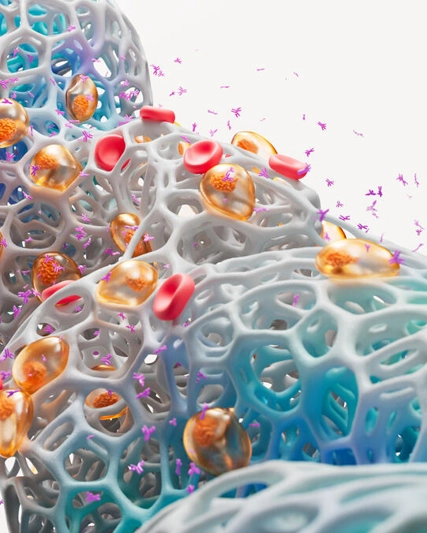
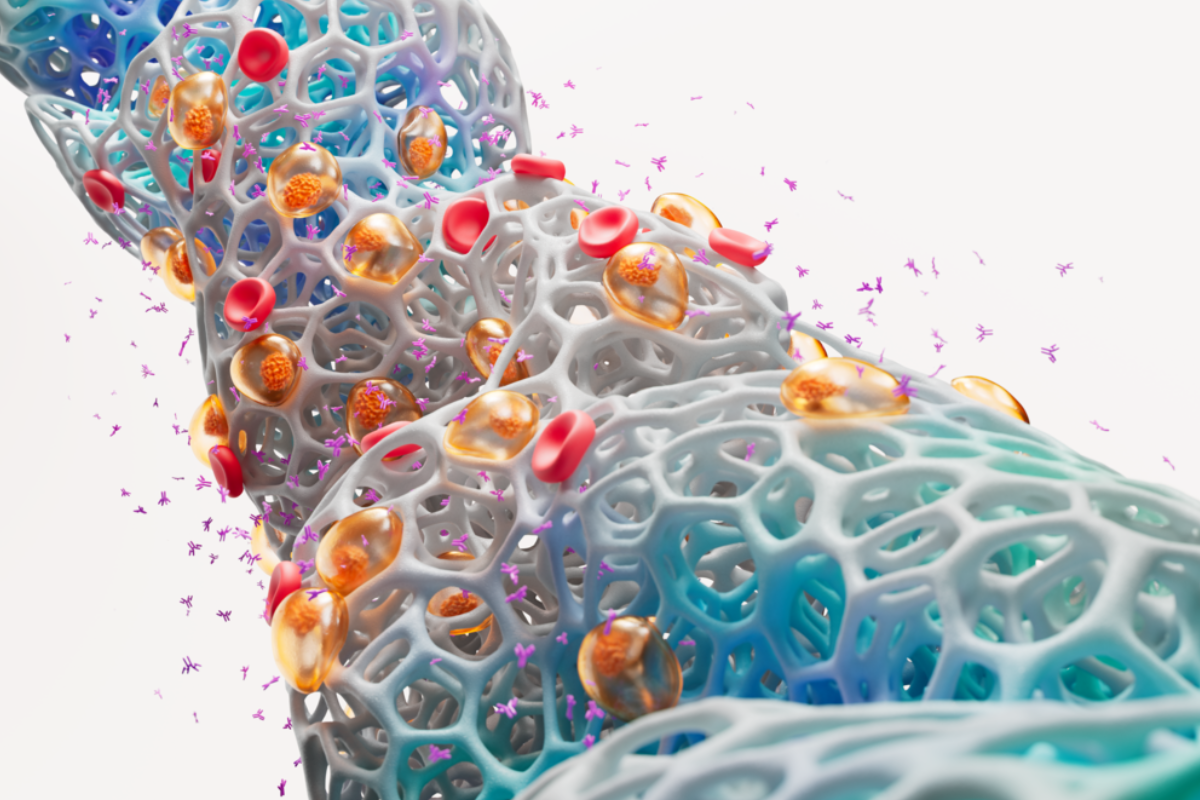
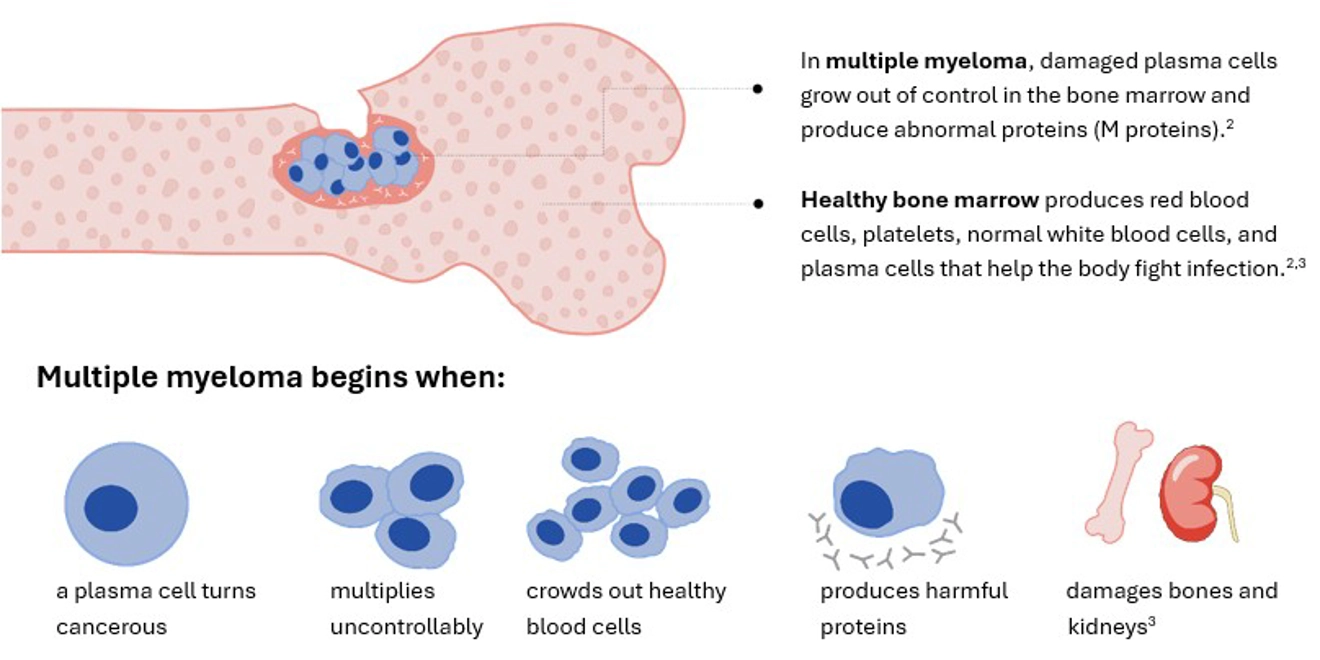
Multiple myeloma is a blood cancer that arises in a person’s bone marrow, when plasma cells mutate into problematic myeloma cells. These cells accumulate, crowding out healthy blood cells.1
How common is multiple myeloma? US statistics and key facts
- ~36,000 people in the US will be newly diagnosed with multiple myeloma in 2026.4
- 18% of all blood cancers in the US are accounted for by multiple myeloma, the second most common blood cancer.5,6
- The average age of diagnosis is 69.7
- Men are 1.5 times more likely to be diagnosed with multiple myeloma.7
- Multiple myeloma affects Black Americans at ~2x the rate seen in white Americans.7
Signs and symptoms of multiple myeloma
In the early stages of multiple myeloma, symptoms may not be noticeable. As myeloma cells begin to crowd out healthy blood cells, symptoms can develop. Common signs and symptoms of multiple myeloma include, but are not limited to:1,8
- Bone breakdown which can cause high levels of calcium, dehydration, excessive thirst, nausea, constipation, and confusion
- Fatigue
- Poor kidney function
- Weakened bones leading to more frequent fractures
- Weakened immune system causing more infections
- Anemia leading to weakness, dizziness, and shortness of breath
Diagnosing multiple myeloma
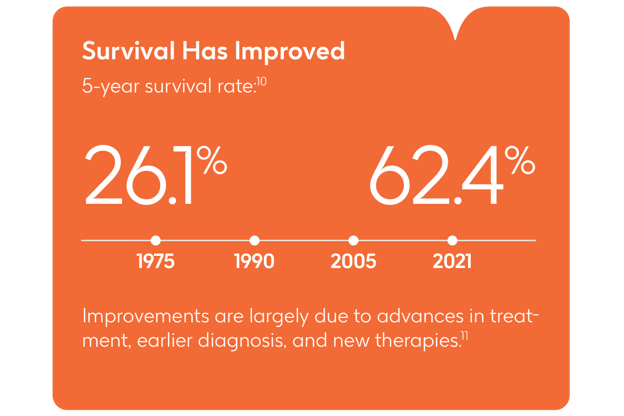
- It can be hard to diagnose multiple myeloma early, and there are no recommended screening tests to look for it in most people.9
- Multiple myeloma is often diagnosed using a combination of tests, including blood and urine tests, bone marrow exams, imaging, and genetic testing.1
- It’s important to work with a healthcare team to determine the best treatment plan. If symptoms develop, several therapies are available for multiple myeloma.1
Relapsed VS. Refractory multiple myeloma: What’s the difference?
Relapse and refractory are commonly used terms when referring to multiple myeloma.12
Relapsed multiple myeloma means the cancer has reappeared following a period of remission or response to previous treatment. Most people with multiple myeloma experience relapse.12
Refractory multiple myeloma means the cancer does not respond to treatment or the cancer progresses within 60 days of stopping treatment. Unlike relapsed multiple myeloma, refractory multiple myeloma never entered a period of remission after treatment.12
Take action
Learn about multiple myeloma to know the signs and talk to a doctor if symptoms persist.
References
Gertz MA. Multiple Myeloma. NORD (National Organization for Rare Disorders). https://rarediseases.org/rare-diseases/multiple-myeloma/. Published 2016. Accessed January 2026.
Cleveland Clinic. Bone Marrow. https://my.clevelandclinic.org/health/body/22818-bone-marrow. Updated April 2022. Accessed January 2026.
Cleveland Clinic. Multiple Myeloma. https://my.clevelandclinic.org/health/diseases/6178-multiple-myeloma. Updated August 2025. Accessed January 2026.
American Cancer Society. Key Statistics About Multiple Myeloma. https://www.cancer.org/cancer/types/multiple-myeloma/about/key-statistics.html. Updated January 2026. Accessed January 2026.
Kazandjian D. Multiple myeloma epidemiology and survival: A unique malignancy. Semin Oncol. 2016;43(6):676–681. doi:10.1053/j.seminoncol.2016.11.004.
American Association for Cancer Research. A Decade of Progress: Transformative Advances in Blood Cancer Research and Treatment. https://cancerprogressreport.aacr.org/progress/cpr25-contents/cpr25-transformative-advances-in-blood-cancer-research-and-treatment/. Updated 2025. Accessed January 2026.
WebMD. Who Gets Multiple Myeloma? https://www.webmd.com/cancer/multiple-myeloma/who-gets-multiple-myeloma. Published June 2024. Accessed January 2026.
Multiple myeloma. Genetic and Rare Diseases Information Center. https://rarediseases.info.nih.gov/diseases/7108/ multiple-myeloma. Published 2016. Accessed August 2025.
American Cancer Society. Can Multiple Myeloma Be Found Early? https://www.cancer.org/cancer/ types/multiple-myeloma/detection-diagnosis-staging/detection.html. Updated February 2025. Accessed January 2026.
National Cancer Institute. Cancer Stat Facts: Myeloma. https://seer.cancer.gov/statfacts/html/mulmy.html. Accessed January 2026.
Mettias S, ElSayed A, Moore J, Berenson JR. Multiple Myeloma: Improved Outcomes Resulting from a Rapidly Expanding Number of Therapeutic Options. Target Oncol. 2025;20(2):247-267. doi:10.1007/s11523-024-01122-4.
Healthline. Relapsed vs. Refractory Multiple Myeloma: What’s the Difference? https://www.healthline.com/health/multiple-myeloma/relapsed-vs-refractory-multiple-myeloma#ask-your-doctor. Published October 2023. Accessed January 2026.