Rectal cancer
Approximately 49,990 cases of rectal cancer are estimated to be diagnosed in the US in 2026.
What is rectal cancer?
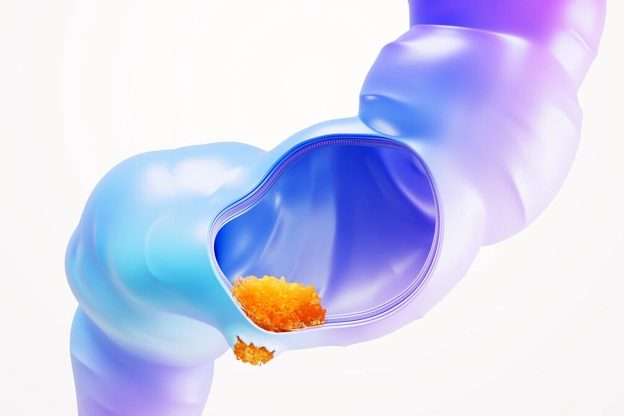
· Rectal cancer is a type of cancer that starts as an abnormal growth of cells in the rectum, which is the last six inches of the large intestine.1
- The rectum connects the colon to the anus and temporarily stores stool until it is ready to be passed.2
· Most rectal cancers begin as small, non-cancerous groups of abnormal cells, called polyps. These polyps can take 5 to 10 years to change into a cancerous tumor on the rectum.1
· Approximately 49,990 cases are estimated to be diagnosed in the US in 2026.3
Rectal cancer vs. colon cancer
Rectal and colon cancer are often grouped together under the term “colorectal cancer” because they share some symptoms; however, they originate in different regions within the large intestine and require different treatment approaches.4
Rectal cancer is less common than colon cancer.5
Colon cancer starts in the colon, which is about five feet long and absorbs water from food waste as it moves through the intestines, while rectal cancer starts in the rectum, which is the last six inches of the large intestine.4
The rectum is a small, confined space, which can impact the types of surgeries that can be performed as well as the nearby organs that can be affected.4,5
Signs and symptoms of rectal cancer
Many people with rectal cancer do not experience symptoms for years; however, as the cancer advances, symptoms often appear.6 Signs and symptoms of rectal cancer may include:7
- Changes in Bowel Habits: Diarrhea, constipation or more frequent need to pass stool
- Feeling of Incomplete Bowel Movements: A sense that the bowel doesn’t fully empty
- Rectal Bleeding: Bright red or dark maroon blood in the stool
- While rectal bleeding can be a sign of rectal cancer, it is often due to other causes such as swollen veins in the rectum known as hemorrhoids. If you notice bleeding, make an appointment with your doctor or healthcare professional for evaluation.6
- Narrow Stool: Bowel movement that looks thinner than usual, like a pencil or string
- Abdominal Discomfort: Gas pains, bloating, cramping or general stomach pain
- Unexplained Weight Loss: Losing weight without trying
- Fatigue: Feeling unusually tired or weak
- Vomiting: In some cases, nausea and vomiting may occur.
How is rectal cancer diagnosed?
Rectal cancer is typically diagnosed through an imaging test called a colonoscopy, which allows doctors to examine the rectum. A colonoscopy uses a long, flexible tube with a camera to look for signs of cancer, and a sample of tissue may be taken for lab testing.8
Rectal cancer staging
Rectal cancer is typically classified in five stages: 0, 1, 2, 3 and 4. The higher numbers indicate more advanced cancer and may mean the cancer has spread to lymph nodes or distant organs, while earlier stages mean cancer is limited to the rectum.9
Healthcare professionals commonly use the TNM staging system to identify each stage in more detail, looking at three key factors:9
- T. The size of the primary tumor.
- N. Whether the cancer has spread to nearby lymph nodes.
- M. Whether the cancer has spread to other parts of the body, called metastasis.
The stages of rectal cancer are as follows:9,10
- Stage 0-1 (localized): Cancer is only in the rectum and has not spread.
- Stage 2 (localized or locally advanced): Cancer has grown through the rectal wall or into nearby tissue but has not spread to lymph nodes.
- Stage 3 (locally advanced/regional): Cancer has spread to nearby lymph nodes but not to distant organs.
- Stage 4 (metastatic/distant): Cancer has spread to distant lymph nodes or organs, such as the liver or lungs.
Rectal cancer survival rates
People with early-stage rectal cancer have a high chance of survival.11 Although, even in early stages, patients may still receive treatments such as surgery, chemotherapy, or radiation, depending on their individual situation.8 As the cancer grows deeper into the rectum or spreads to other parts of the body, the five-year survival rate decreases.11
Data from the National Cancer Institute shows 68% of people with rectal cancer were alive five years after diagnosis. The five-year survival rates by tumor location are as follows:10
- Local: 91%
- Regional: 74%
- Distant: 17%
Risk factors of rectal cancer
A few factors can increase your risk of getting rectal cancer, including:12
- Age
- The risk of rectal cancer increases with age (average age of diagnosis is 63).
- However, rectal cancer is affecting adults at younger ages.
- Certain health conditions
- Inflammatory bowel diseases, such as Crohn’s disease and ulcerative colitis can increase risk.
- Excess body weight (obesity/being overweight)
- Type 2 diabetes
- History of colorectal polyps
- Family history
- Your chance of developing rectal cancer is almost double if you have a close relative with the disease.
- Sex
- Men are slightly more likely to develop the disease than women.
- Inherited colorectal cancer syndromes
- Inherited genetic syndromes like Lynch syndrome and familial adenomatous polyposis (FAP) can raise the likelihood of developing rectal cancer.
- Race
- Black people are more likely to develop rectal cancer.
- Lifestyle factors
- Moderate to heavy alcohol use
- Diets heavy in red meat or processed meats or low vegetable intake
How is rectal cancer treated?
Treatment may include surgery to remove the cancer.8 These surgeries can carry risks of complications that vary depending on the individual and their overall health, the location of the tumor, and the specific type of surgery.13 If the cancer has spread or grown larger, treatment may start with chemotherapy, radiation, or a combination of the two before determining a plan for surgery. Other treatment options may include immunotherapy, targeted therapy, and palliative care.8 All therapies come with their own risk factors and potential side effects.
Potential challenges with rectal cancer treatment
- Surgery can cause life-changing complications including:13
- Bleeding, infection, trouble controlling bowel movements, sexual dysfunction, fertility issues, ongoing fatigue or weakness, and adhesions.
- A temporary or permanent stoma, which is a small opening created on the surface of the body in the abdomen to allow waste from the intestines to leave the body.
- Urinary dysfunction, including frequent or urgent urination, leaking urine, or trouble emptying the bladder.
- Radiotherapy can significantly impact quality of life, potentially leading to diarrhea, constipation, incontinence, bowel urgency, bloating, skin irritation, and fertility issues.14,15
- Chemotherapy can also cause upset stomach (diarrhea/nausea/vomiting), low white blood cell count, and nerve issues that can cause pain, numbness, tingling, or muscle weakness.16
- Immunotherapies may cause immune-related side effects that can range from mild to life-threatening and can affect the skin, intestines, liver, endocrine system or lungs.17 Other potential side effects may include fatigue, diarrhea, rash, loss of appetite and more.18,19
- Targeted therapy side effects can vary depending on the type of therapy used. Common side effects in some targeted therapies used for colorectal cancer may include skin or eye problems, diarrhea, fatigue, hypertension and wound-healing complications, depending on the specific treatment.20,21
- Patients with rectal cancer can face up to 4 times higher healthcare costs than those without.22
Prevention & early detection
Regular screenings can catch abnormal cells early before they become cancer. Talk to your healthcare provider for more information about the right time to begin colorectal cancer screenings.23
There is no sure way to prevent rectal cancer, but you may be able to lower your risk by:23
- Being aware of possible symptoms
- Learning about your family medical history
- Getting regular screening tests (e.g., colonoscopy, stool tests, etc.) based on the recommendations of your healthcare provider
- Maintaining a healthy body weight and increasing physical activity
- Not smoking
- Limiting or lowering alcohol intake
- Limiting red and processed meats
- Eating more fruits, vegetables and whole grains
Frequently asked questions
References
Brigham and Women’s Hospital. Rectal Cancer. https://www.brighamandwomens.org/cancer/rectal-cancer. Accessed January 2026.
Cleveland Clinic. Rectum. https://my.clevelandclinic.org/health/body/24785-rectum-functionUpdated March 2023. Accessed January 2026.
American Cancer Society. Key Statistics for Colorectal Cancer.https://www.cancer.org/cancer/types/colon-rectal-cancer/about/key-statistics.html. Updated April 2025. Accessed January 2026.
WebMD. Colon and Rectal Cancer: What’s the Difference?https://www.webmd.com/colorectal-cancer/colon-rectal-cancer-whats-difference. Reviewed January 2025. Accessed January 2026.
Michigan Medicine. How Colon and Rectal Cancer Differ.https://www.michiganmedicine.org/health-lab/how-colon-and-rectal-cancer-differPublished March 2019. Accessed January 2026.
Mayo Clinic. Rectal Cancer Symptoms & Causes. https://www.mayoclinic.org/diseases-conditions/rectal-cancer/symptoms-causes/syc-20352884. Published September 2025. Accessed January 2026.
Brigham and Women’s Hospital. Symptoms of Rectal Cancer.https://www.brighamandwomens.org/cancer/rectal-cancer/symptoms-rectal-cancer. Accessed January 2026.
Mayo Clinic. Rectal Cancer Diagnosis & Treatment.https://www.mayoclinic.org/diseases-conditions/rectal-cancer/diagnosis-treatment/drc-20352889. Published September 2025. Accessed January 2026.
Mayo Clinic. Rectal Cancer Stages.https://www.mayoclinic.org/diseases-conditions/rectal-cancer/stages/gnc-20589091. Published September 2025. Accessed January 2026.
Cleveland Clinic. Rectal Cancer.https://my.clevelandclinic.org/health/diseases/21733-rectal-cancer. Reviewed February 2024. Accessed January 2026.
Mayo Clinic. Rectal Cancer Survival Rates.https://www.mayoclinic.org/diseases-conditions/rectal-cancer/survival-rates/gnc-20589092. Published September 2025. Accessed January 2026.
Brigham and Women’s Hospital. Rectal Cancer: Risk Factors, Prevention and Screening. https://www.brighamandwomens.org/cancer/rectal-cancer/risks-prevention-and-screening. Accessed January 2026.
Mayo Clinic. Rectal Cancer Surgery.https://www.mayoclinic.org/tests-procedures/rectal-cancer-surgery/about/pac-20587354. Published October 2025. Accessed January 2026.
OncoDaily. Managing Long-Term Bowel Problems After Radiotherapy: Causes, Symptoms & Solutions. https://oncodaily.com/oncolibrary/radiotherapy/long-term-bowel-problems. Accessed January 2026.
Jiang Q, Hua H. Fertility in young-onset colorectal patients with cancer: a review. Oncologist. 2024;29(10):e1237-e1245. doi:10.1093/oncolo/oyae141
Han CJ, Ning X, Burd CE, et al. Chemotoxicity and associated risk factors in colorectal cancer: a systematic review and meta-analysis. Cancers (Basel) 2024;16(14):2597. doi:10.3390/cancers16142597
ASCO answers. Alexandria, VA: American Society of Clinical Oncology. 2021.
American Cancer Society. Immunotherapy for Colorectal Cancer.https://www.cancer.org/cancer/types/colon-rectal-cancer/treating/immunotherapy.html#:~:text=for%204%20treatments.-,Possible%20side%20effects%20of%20immunotherapy,to%20suppress%20your%20immune%20system. Updated April 2025. Accessed February 2026.
National Cancer Institute. Immune Checkpoint Inhibitors.https://www.cancer.gov/about-cancer/treatment/types/immunotherapy/checkpoint-inhibitors. Updated April 2022. Accessed February 2026.
Fakih M, Vincent M. Adverse events associated with anti-EGFR therapies for the treatment of metastatic colorectal cancer. Curr Oncol. 2010;17 Suppl 1(Suppl 1):S18-S30. doi:10.3747/co.v17is1.615
Lemmens L, Claes V, Uzzell M. Managing patients with metastatic colorectal cancer on bevacizumab. Br J Nurs. 2008;17(15):944-949. doi:10.12968/bjon.2008.17.15.30695
Solem CT, Moore-Schiltz L, Tkacz J, O’Donnell S. Real-world treatment patterns, healthcare resource utilization (HCRU), and costs in newly diagnosed patients with rectal cancer (RC) in the United States (US). JCO Oncol Pract. 21(10):suppl12. doi:10.1200/OP.2025.21.10_suppl.12
American Cancer Society. Can Colorectal Cancer Be Prevented?https://www.cancer.org/cancer/types/colon-rectal-cancer/causes-risks-prevention/prevention.html. Reviewed April 2025. Accessed January 2026.
Mofitt Cancer Center. Where Does Metastatic Rectal Cancer Spread To? https://www.moffitt.org/cancers/rectal-cancer/faqs/where-does-metastatic-rectal-cancer-spread-to/. Accessed January 2026.
WebMD. Colon and Rectal Cancer: What’s the Difference? https://www.webmd.com/colorectal-cancer/colon-rectal-cancer-whats-difference. Reviewed January 2025. Accessed January 2026.
Biology Insights. Rectal Cancer Pictures: What It Looks Like. https://biologyinsights.com/rectal-cancer-pictures-what-it-looks-like/. Published July 2025. Accessed January 2026.