Adult vaccination plays an important role in helping protect people across the life course, yet vaccination rates in the United States remain below national public health targets. While conversations about vaccine uptake often focus on individual decision-making or patient hesitancy, new research published in Vaccine from two GSK authors underscores that the barriers to adult vaccination are broader and more complex.
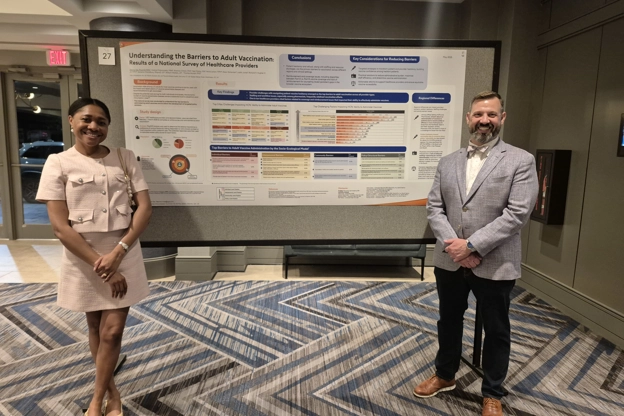
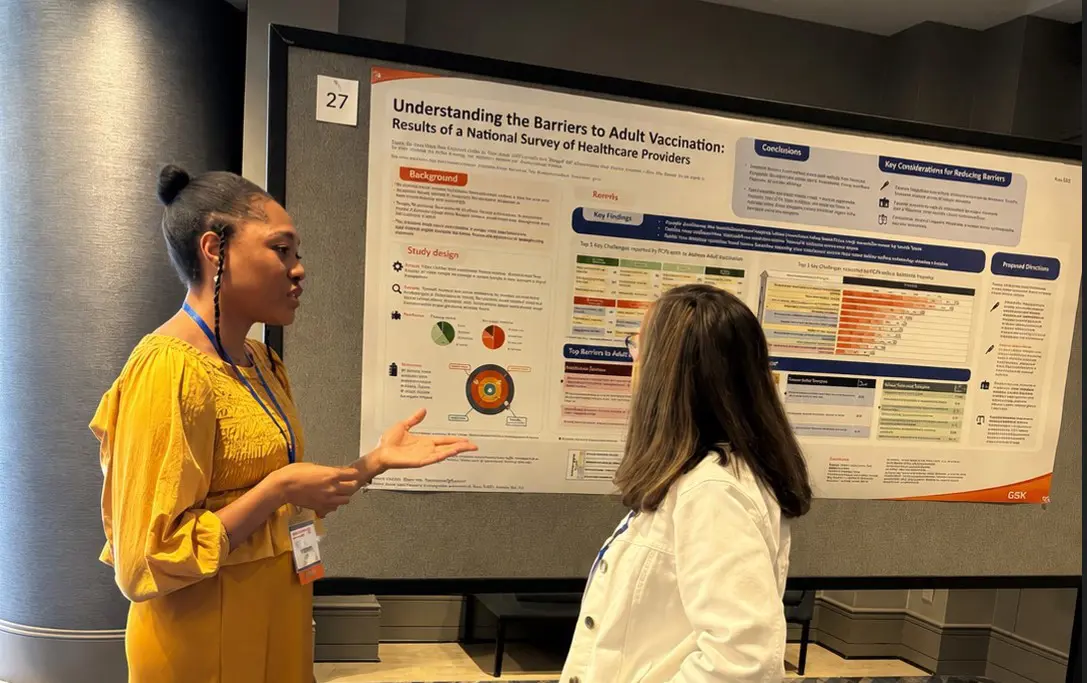
The study, “Barriers to Adult Vaccination: Findings from a National Survey of Healthcare Professionals,” surveyed more than 1,200 healthcare professionals across office- and pharmacy-based settings to better understand the challenges they face when recommending, administering and facilitating access to adult vaccines.
The findings point to a multitude of barriers – from patient questions and confusion around guidelines to reimbursement complexities, staffing constraints, workflow pressures and fragmented immunization records.
To better understand what these findings mean for the adult vaccination ecosystem, study authors Tommy Acciani, Director of U.S. Vaccine Policy, and Ifeoma Ibe, former Manager of U.S. Vaccine Policy, share thoughts on the importance of elevating healthcare professionals’ perspectives and the need for targeted strategies that support both providers and patients.
What did healthcare professionals identify as the top barriers to adult vaccination?
Tommy Acciani: One of the clearest findings from the survey is that patient hesitancy and vaccine refusal remain significant barriers to adult vaccination, affecting healthcare professionals' (HCPs) ability to recommend and administer vaccines. While this finding aligns with broader trends in vaccine confidence and hesitancy observed over the past decade, HCPs also identified systemic challenges, including reimbursement limitations, Medicare Part D complexities, staffing shortages, workflow constraints, and fragmented immunization records that can hinder vaccine delivery. These findings underscore the importance of addressing both patient and system-level factors to improve vaccine access and uptake.
How should healthcare professionals’ perspectives influence the way we think about vaccine policy?
Ifeoma Ibe: HCPs are among the most trusted sources of vaccine and vaccination information and play a critical role in helping patients understand, access, and receive recommended vaccines. As today’s vaccine environment creates new questions and uncertainty for many patients, it is essential to equip HCPs with the knowledge, tools, and confidence to navigate vaccine conversations effectively. At the same time, improving vaccine uptake requires looking beyond patient hesitancy alone to understand the full range of factors influencing vaccination. Vaccinators must be supported through efficient workflows, sustainable reimbursement models, and streamlined operational systems that reduce administrative burden and enable the practice of evidence-based medicine. Given the significant demands on their time and resources, ensuring HCPs can focus on patient care and meaningful vaccine discussions is essential to increasing vaccination rates. Gathering HCP perspectives at scale can also help identify trends across practice settings, highlighting opportunities to preserve effective processes and address barriers that may otherwise go unnoticed.
With these findings in mind, how can we explain the need for targeted strategies to improve vaccine access and uptake?
Tommy Acciani: The survey findings reinforce that there is no single barrier to adult vaccination – and therefore no single solution. Barriers can differ meaningfully depending on the vaccine, the type of HCP, the practice setting and the patient population being served.
For example, the findings show that hesitancy may be especially pronounced for COVID-19 vaccination, while meningococcal vaccination may be more heavily impacted by workflow and system-driven challenges.
Differences also emerged across care settings, where coverage, reimbursement, and access issues can affect vaccine delivery depending on the location. Similarly, larger health systems may be better positioned to absorb or manage cost and billing concerns, while smaller practices may face more direct challenges related to upfront costs and inconsistent reimbursement processes.
These differences matter because they point to the need for targeted, context-specific strategies to drive increased access and uptake. Improving adult vaccination cannot rely on a one-size-fits-all approach. Instead, solutions should be tailored to the specific barriers HCPs encounter in their day-to-day practice.
How can these findings be used to improve adult vaccine access and uptake?
Ifeoma Ibe: These data can help inform more coordinated efforts across the vaccine ecosystem by identifying where HCPs are experiencing the greatest challenges and where support may be most needed. Understanding HCP perspectives at scale helps reveal common trends, even while recognizing that every practice and patient population is different. The goal is to use these insights to support practical, solutions-oriented conversations with policymakers, advocacy organizations, professional societies, health systems and others who play a role in adult vaccination. That includes identifying opportunities to reduce access barriers, strengthen HCP confidence, improve workflows, and make vaccine delivery less complicated for both professionals and patients. Importantly, the findings also underscore the need to keep HCPs at the center of vaccine access discussions. HCPs are not only trusted messengers, they are the people responsible for operationalizing vaccination in real-world settings. Supporting them with the right tools, systems, and policies is essential to helping more adults receive recommended vaccines and ultimately making everyone healthier.
Looking ahead
While the survey findings uncovered a wide variety of context-specific challenges, one thing is clear: it is critical to understand healthcare professionals’ experiences at scale to inform real-world vaccination strategies. By bringing these perspectives together, stakeholders across the vaccine ecosystem can identify opportunities to better support vaccinators, inform targeted interventions, and help make adult vaccination more accessible for everyone. Collectively, the findings may also serve as a roadmap for stakeholders seeking to address both patient and system-level barriers to vaccine delivery and uptake.