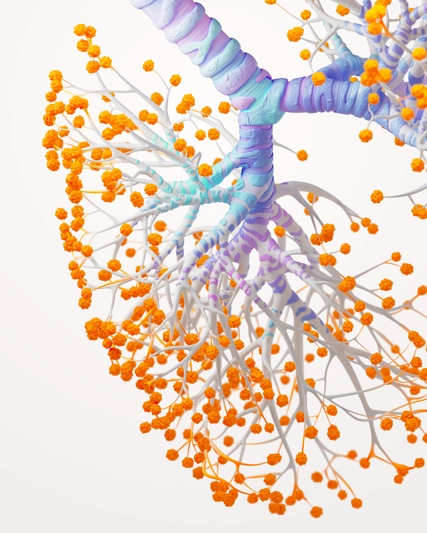
Our immune system is a powerful and complex system that is fundamental to keeping us healthy.1 However, when the immune system becomes overactive or mistakenly attacks healthy tissue, the results can be long lasting. Instead of protecting the body, an overactive immune system can drive chronic inflammation, leading to symptoms such as fatigue, difficulty breathing, joint swelling and pain, or skin irritation.2
To help manage conditions caused by an overactive immune system, scientists have developed a class of treatments known as biologics. While these therapies have transformed the treatment landscape for individuals living with a wide range of chronic conditions — from autoimmune disorders like lupus and rheumatoid arthritis to respiratory conditions like asthma and COPD— many questions and misconceptions remain. If you have ever wondered, “What are biologics?,” “Are they safe?” or “When are they prescribed?,” you are not alone.
Below, we separate myth from medicine to help you understand the basics of biologic therapies.
Myth: Patients are only prescribed biologics after irreversible damage has been done3
Fact: Biologics are increasingly used earlier in treatment to protect organs and tissues from long-term damage
A common misconception is that biologics are reserved only for use after organ damage has occurred. In reality, the goal of biologic therapy is not to “catch up” to a disease after symptoms have already caused irreversible damage, but rather to protect long-term function and prevent irreversible tissue or organ damage before it occurs.4
In chronic respiratory conditions like severe asthma, delaying advanced treatment can lead to permanent scarring of the lung tissue over time.5 Yet, while biologics have demonstrated benefit in controlling severe asthma, only 20% of eligible patients in the U.S. currently receive one, increasing their risk of severe asthma attacks and worsening disease.6
Introducing targeted therapies earlier in the asthma care journey can prevent permanent lung damage, reduce the frequency of debilitating flare-ups and significantly lower reliance on high-dose steroids, which can carry their own side effects.7
Myth: Biologics are experimental treatments and safety risks are not well researched8
Fact: Biologics are rigorously tested and reviewed by regulatory agencies before being prescribed to patients
Biologics target the immune system in a more precise way than traditional medicines, blocking only the specific part of the immune system that is driving the disease and minimizing its effect on healthy tissues.9 For example, in lupus, targeting specific immune pathways has been shown to provide effective and long-lasting disease control, helping to prevent irreversible organ damage – like end-stage kidney disease – before it starts.10,11 Similarly, in rheumatoid arthritis, biologics target the specific proteins that cause joint swelling and pain, helping to prevent joint damage before it limits a person’s mobility.12
Like all prescription medicines, biologics must go through a rigorous scientific review by regulatory agencies like the U.S. Food and Drug Administration before they reach patients. This years-long process includes laboratory testing followed by three phases of clinical trials to determine if the biologic is safe and effective to treat the condition being studied. This process ensures that by the time the biologic is approved, its benefits and safety profile have been thoroughly evaluated.13
Myth: Biologics suppress your whole immune system8
Fact: Biologics are designed to suppress specific parts of the immune system
Your immune system has many moving parts, each with a specific job.1 A biologic doesn’t shut down your whole immune system; it zeros in on one specific problem and quiets it.1,9 However, biologics are not a “one-size-fits-all” solution. Because every person’s disease experience is unique, these therapies may not always be the right choice. Successful treatment depends on individualized care where the doctor and patient work together to discuss the potential benefits, and risks of side effects, of medicines like biologics based on their specific needs.
Biologics have transformed what is possible for many people living with chronic, immune-related conditions. By offering a highly targeted approach to treatment, these innovative therapies allow patients to look beyond daily symptom management toward a future of long-term health and wellness. If you are navigating a condition like severe asthma, lupus, eczema or rheumatoid arthritis, talk to your healthcare provider to see if a biologic therapy might be the right fit for your personal care journey.
Biologic innovation focuses on designing treatments that interact specifically with pathways and proteins driving a disease, rather than affecting the whole body,” says Precil Varghese, Vice President of US Specialty Medical Affairs. “By precisely targeting only a root cause of a disease, these therapies offer patients a way to safely achieve long-term control over their conditions and get back to enjoying their daily lives.”

References
Centers for Disease Control and Prevention. Healthy Habits: Enhancing Immunity. 2026. Available at: https://www.cdc.gov/healthy-weight-growth/about/enhancing-immunity.html. Last accessed June 2026.
Understanding autoimmune diseases. NIH News in Health. June 2022. Accessed June 23, 2026 https://newsinhealth.nih.gov/2022/06/understanding-autoimmune-diseases
Schleich F, et al. Asthma in the biologics era: should oral corticosteroid therapy be relegated to history? J Allergy Clin Immunol Pract. 2025;13(7):1559-1568. doi: 10.1016/j.jaip.2025.04.007
Patil SJ, Thorat VM, Koparde AA, Bhinge SD, Chavan DD, Bhosale RR. Unlocking the future: new biologic therapies for rheumatoid arthritis. Cureus. 2024;16(10):e72486. doi:10.7759/cureus.72486
Maspero J, Adir Y, Al-Ahmad M, et al. Type 2 inflammation in asthma and other airway diseases. ERJ Open Res. 2022;8(3):00576-2021. doi:10.1183/23120541.00576-2021
Park J, Gelwicks S, RK R, et al. Unmet treatment needs in asthma patients with eosinophilic phenotype: A US claims-based study on asthma exacerbations and Healthcare Resource Utilization. Chest. 2024;166(4):A4649A4650, https://doi.org/10.1016/j.chest.2024.06.2816.
Tomasello A, Benfante A, Principe S, Scichilone N. Early Initiation of Biologic Therapies to Prevent Severe Asthma Progression. Medicina (Kaunas). 2025;61(10):1797. doi: 10.3390/medicina61101797
14 biologic myths vs facts you should know. Biologic Meds. 2026. Accessed June 23, 2026. https://biologicmeds.org/biologics-myths-vs-facts/
American Cancer Society Cancer Action Network. Understanding Biologic and Biosimilar Drugs. American Cancer Society Cancer Action Network. Published June 28, 2021. Accessed June 5, 2026. https://www.fightcancer.org/policy-resources/understanding-biologic-and-biosimilar-drugs
Mitchell, Jordan L. “Understanding the impact of delayed diagnosis and misdiagnosis of systemic lupus erythematosus (SLE).” Journal of family medicine and primary care vol. 13,11 (2024): 4819-4823. doi:10.4103/jfmpc.jfmpc_1177_24
Kundnani NR, Levai MC, Popa MD, et al. Biologics in Systemic Lupus Erythematosus: Recent Evolutions and Benefits. Pharmaceutics. 2024 Sep 6;16(9):1176. doi: 10.3390/pharmaceutics16091176.
Arthritis Foundation. Biologics. Updated September 3, 2022. Accessed June 23, 2026. https://www.arthritis.org/drug-guide/biologics/biologics
“Step 3: Clinical Research | FDA.” U.S. Food & Drug Administration, 4 Jan. 2018, www.fda.gov/patients/drug-development-process/step-3-clinical-research.